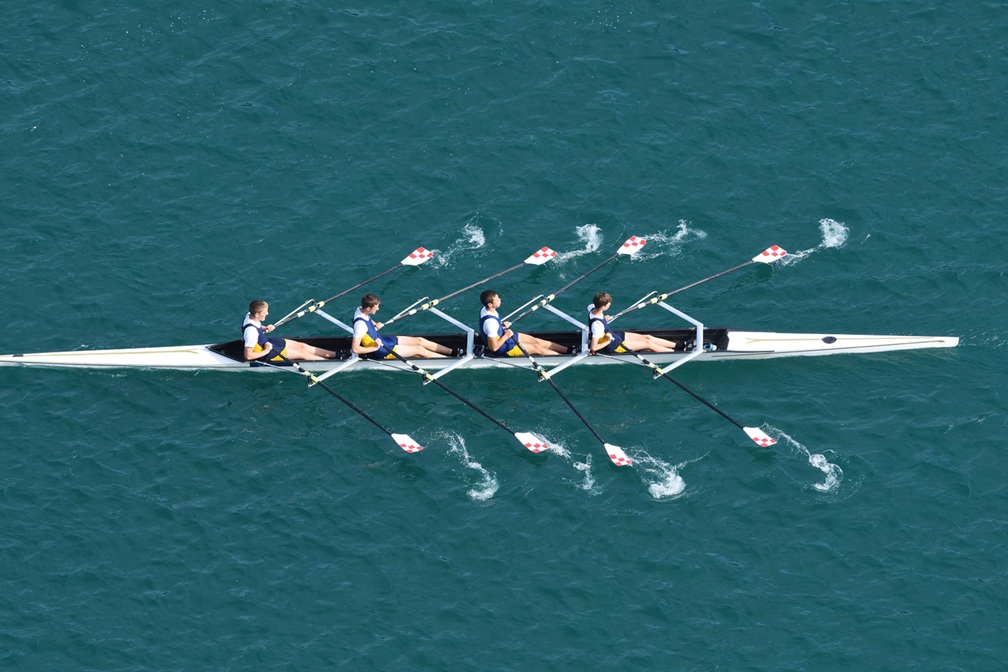
ALIGNING SENIOR LEADERSHIP TEAMS

Team offsites that actually drive high performance

Offsites and strategy days that build clarity, trust and follow-through, facilitated by a registered psychologist.  
Shanel Winning, Registered Psychologist, facilitating offsites for twenty years.
Twenty years of developing senior leadership teams
Team days from $10,000 plus GST
THE CRITICISM

Most team offsites work on the wrong things in the wrong way.

You've probably had the misfortune of attending one of these.

The fun but pointless, where you're swimming in inspirational platitudes, sporting analogies, and alcohol.

The "this could have been an email", where you're talked at all day, all while being told "your contribution is valued".

The utterly embarrassing, where making up a dance to "reflect the team's values" is a serious activity.

Or the downright cruel, where the facilitator "breaks you down to build you back up as a team".

I wish these were made-up examples. But they're not.
So when leaders say they just want to get their team together to bond, I understand why. That's the best they've ever seen a team day achieve.

But done well, they get a team working as one, on the day and beyond.

A good offsite should improve team performance

It creates clarity on where you're heading

Even the most capable, bonded team won't reach a destination they can't see. So if the team isn't yet agreed on what they're trying to achieve, we start there. Not straight to initiatives. Or rewriting visions and missions already in place. But the outcomes we're after, and the priorities that will get us there, so every decision is aligned with our aims.

It creates clarity on what's expected

Without it, everyone works to their own style and standards. And then judges others by their own. Styles and values conflict, tensions rise, and issues either fester or explode. An agreed operating philosophy sets out the team's way of working: how we'll decide together, how we'll support each other, how we'll make it safe to speak up.

It shifts how the team thinks and works

Imposing strategy and expectations gets compliance, not commitment. But working through ambiguity to get to clarity together makes it stick. That's why I teach as we go: how strategy is actually developed, and how high-performing teams behave. Because capturing the team's current thinking and handing it back to them isn't going to change a thing.

It creates accountability for follow-through

A single day, unmoored from anything else, is a wasted opportunity. But when tangible agreements are made, they can be embedded, reviewed, and refined, iteratively improving how the team works, well after the team day is done. And if you do have to hold someone accountable, it's easier to do on expectations they've helped to create.
THE DIFFERENCE

Four things to look for

01 Is the design built on evidence?

War stories from sport or business aren't a method, and what worked for one team in one context rarely transfers to yours. The day should be structured around what actually helps teams deliver beyond-the-odds results, rather than one person's experience.

02 Is the day actually collaborative?

"Here's what I prepared earlier, let me know if you've got suggestions" doesn't work, because nobody wants to own and drive what they didn't help create. The team needs time to think, talk, and work together. An overpacked agenda is a real red flag.

03 Is there a tangible result?

A co-designed strategy. An agreed way of working. Something the team can actually hold itself to. Good vibes and nice photos feel good in the moment, but fond memories don't drive change.

04 Is your context considered?

Tick-box offsites are plug and play, no conversation required. When the day doesn't feel relevant, people generally get very little from it. But the bigger risk is running an offsite when you really need something else. Deep conflict and serious mistrust need to be dealt with first.
THE HIGH PERFORMANCE PATHWAY

The formats

Every engagement starts the same way: a confidential call to understand your goals, your team, and what's really going on. From there, we'll confirm the right format together, whether that's a focused away day, a two-day strategy offsite, or something designed specifically for your situation.
Strategy days to get everyone flying in formation.

Strategy Days

Align the team on direction and priorities
The session aligns the team on direction by developing strategy together: a team purpose that summarises what you're trying to achieve, a documented set of priorities that spell out the trade-offs that need to be balanced, and the initiatives to be executed. It runs across two facilitated days with structured work between them, to ensure we don't rush to initiatives before we understand our aim, and so the level below can contribute as well. Because strategy is developed, not just captured, I teach the how as we go, such as how to balance trade-offs, and how to test thinking against reality before committing to it.
Confidential design call to understand your goals and context
Strategy call with leader to understand work done to date
Two facilitated days, three weeks apart, with structured pre-work for participants
Strategy developed by the team, not delivered to them
Agreed priorities with owners for follow-through
Team offsite to develop a high-performing team.

Team Offsite

Strengthen how the team works together
The session strengthens how the team works together by developing a shared operating philosophy: a documented set of agreements about how you'll work together, build trust, hold each other accountable, and support one another. It's built on the established pillars of high-performing teams, and includes experiential activities and practical tools for the specific skills that make the philosophy possible to action, such as making decisions in the best interests of the overall business rather than a functional patch, and how to raise issues in a way that resolves the problem and maintains the relationship.
Confidential design call to understand your goals and context
Anonymous survey beforehand to establish baseline of team functioning
Full-day agenda, structured around research on high-performing teams
Mix of experiential activities, practical tools, and facilitated discussion
Operating philosophy drafted from team’s suggestions on the day
A custom session, designed to meet your specific needs.

Something Bespoke

A session geared towards your goals
Whether it's a strategy roadshow, leadership conference, all hands meeting, or custom workshop that you need, give me a call and we'll design it together.
Confidential design call to understand your goals and context
A tailored proposal with a fixed price attached
THE PROCESS

The offsite process

A streamlined and convenient process for busy leaders.
THE PSYCHOLOGIST

Shanel Winning

Shanel Winning is a registered psychologist who helps organisations get results that last, by focusing on the factors that actually produce them: their people, their leaders, their culture, and their strategy. She took the long way here: operations, information systems, marketing, a stint in mergers and acquisitions, then registration as a psychologist in 2006. Twenty years on, she's known for logical advice that's backed by evidence and proven in practice.
Follow Shanel on LinkedIn
Shanel Winning, Registered Psychologist, working with a client.
FAQ

Commonly asked questions about team offsites

How much does a team offsite cost?

A facilitated away day starts at $10,000+GST, including a confidential design call, a tailored agenda you approve, the full-day session, and documented commitments afterwards. A two-day strategy offsite starts at $20,000+GST. Where a team needs individual preparation first, that's scoped to the situation, always as a fixed price.

What should a leadership team offsite include?

Four things. Clarity on what the team is actually trying to achieve. Agreement on how you'll work together, an operating philosophy, not a poster of values. A genuine shift in thinking, which means the team doing the work, not being talked at. And documented follow-through, so the day changes something on Monday.

Isn't this just team building?

No. Most team building works on camaraderie, and camaraderie is rarely the problem. Senior teams are held back by unspoken expectations and quiet disagreement about direction. We work on those, with the psychological safety to do it constructively, and leave with agreements the team wrote and will hold each other to.

What if there's conflict in the team?

Then an offsite may not be the right first step. Deep conflict and mistrust need addressing before a team can do anything useful in a room together, usually through confidential individual conversations first. Otherwise, a team offsite risks making things worse.

When is a team offsite most useful?

New teams or teams with a new leader, teams going through change, teams where performance has stalled, teams working at cross purposes or without a clear strategy, teams starting to have little tensions or misunderstandings because they don't have agreed ways of working together, good teams who want to keep improving.

Who facilitates the team offsites?

Shanel Winning, a registered psychologist with twenty years of developing senior leadership teams across New Zealand and Australia. The psychology matters: it's what makes it safe to surface the real issues, and what separates a working session from a day of activities.

Will you travel outside of Auckland?

Yes, I travel regularly, and offer offsites across New Zealand and Australia.

How do I arrange a session with you?

Book a call to discuss what you're hoping to achieve, so I can recommend an approach to suit.

CONTACT

Let's start a conversation

If you’re considering working with me, send me an email with a bit of context about your situation and what you’re hoping to achieve. I read every enquiry personally. If I think I can help, I’ll be in touch to arrange an initial complimentary call.
Urgent psychometric testing
Coaching for existing clients
Socials
Thank you! Your submission has been received!
Oops! Something went wrong while submitting the form.